
News
2025/ 09 / 25
Latest News in the Iron and Steel Industry
Recently, the iron and steel industry has seen frequent developments in policy regulation, international trade, technological innovation, and market trends. Below is a summary of the key news:
I. Policy Level: Five Ministries Jointly Issue a Steady Growth Plan
On September 22, five ministries including the Ministry of Industry and Information Technology jointly issued the Work Plan for Stabilizing Growth in the Iron and Steel Industry (2025-2026), which clearly sets a target of an average annual growth rate of approximately 4% for the industry’s added value over the next two years. The plan focuses on five core measures:
- Capacity Regulation: Strengthen efforts in capacity replacement with reduced volume, provide policy preferences for low-carbon projects such as electric arc furnace steel and hydrogen metallurgy, and implement a three-level classification management system for iron and steel enterprises (leading, standardized, and non-standardized) to guide the concentration of resources in advantageous enterprises.
- Technological Innovation: Focus on key steel products required for high-end equipment, such as bearing steel and superalloy, and organize collaborative research across the industrial chain; support the construction of pilot platforms for high-end special steel and hydrogen metallurgy, and promote the certification and application of green and low-carbon steel.
- Investment Upgrading: Accelerate the renewal of outdated equipment such as blast furnaces and converters, promote advanced electric arc furnace equipment, and encourage long-process steel plants to transform into short-process ones; meanwhile, require the completion of ultra-low emission transformation in an all-round way by the end of 2025.
- Demand Expansion: Expand the application of steel structures in construction, transportation, and other fields, and support the construction of steel structure industrial parks and digital supply chain platforms.
- International Cooperation: Stabilize the supply of raw materials such as iron ore and coking coal, encourage the import of high-quality resources, and maintain the stability of the foreign trade market.
II. International Trade: Record-High Export Volume Coexists with Trade Barriers
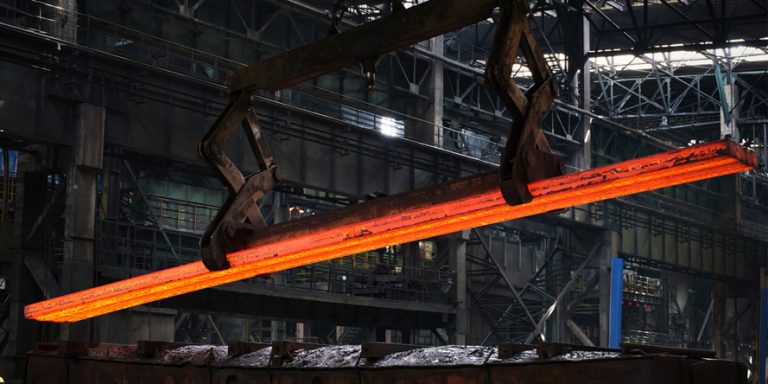
- Surge in Export Data: According to data from the General Administration of Customs, China’s export volume of steel billets reached 1.76 million tons in August, a month-on-month increase of 12% and a year-on-year surge of 230%. The cumulative export volume from January to August reached 9.24 million tons, with a year-on-year increase of 292%, constantly refreshing historical records.
- Escalating Trade Frictions: On September 10, Egypt launched a safeguard measure investigation into imported steel products such as steel billets and cold-rolled coils, which may pose new barriers to China’s steel exports. Prior to this, a number of countries had initiated anti-dumping or countervailing investigations against Chinese steel products.
III. Technological Innovation: AI Large Models Become the Focus of Intelligent Transformation
On September 18, during the Huawei Connect 2025 conference, the Roundtable on Intelligent Transformation of the Iron, Steel and Non-Ferrous Metals Industry revealed a number of technological breakthroughs:
- Application of Industry-Specific Large Models: Chinalco Group’s “Kun’an” large model (the first AI large model in the non-ferrous metals field) has been applied in 18 scenarios across 8 major fields including mining and smelting; Nanjing Iron and Steel Group’s “Yuanye” iron and steel large model (the first industrial large model in the special steel field) has realized the full-process intelligence of R&D and production through a multi-model collaborative architecture, promoting the transformation from “experience-based steelmaking” to “technology-based steelmaking”.
- Deepening Technological Cooperation: Huawei has jointly launched “AI + Iron and Steel” solutions with a number of steel enterprises. Relying on Ascend computing power and Pangu large model technology, these solutions connect the entire process scenarios such as sintering and ironmaking, forming a closed loop from data to intelligent applications.
IV. Market Trends: Volatile and Differentiated Prices, Subpar Demand in Peak Season
- Price Fluctuations: The price of ordinary billets in Qian’an, Tangshan has been continuously raised recently, reaching 3,030 yuan/ton (including tax) on September 15, with a cumulative increase of 110 yuan/ton compared with the beginning of September. However, according to the Lange Iron and Steel Index, the national absolute steel price index in mid-September was 3,568 yuan. Although it increased slightly by 0.4% month-on-month, the release of demand in the traditional peak season was less than expected, resulting in a market pattern of “strong supply and weak demand”.
- Performance of Futures and Stock Market: The main contract of rebar closed at 3,172 yuan/ton in mid-September, with a weekly increase of about 0.8%, but the position decreased by 30,000 lots, and the long-short game slowed down. The A-share iron and steel industry index has fluctuated downward since September, closing at 816.19 points on September 23, a decrease of 4.2% compared with the beginning of September.
V. Enterprise Dynamics: Overseas Steel Plant Capacity Doubles, Limited Impact of Domestic Production Cuts
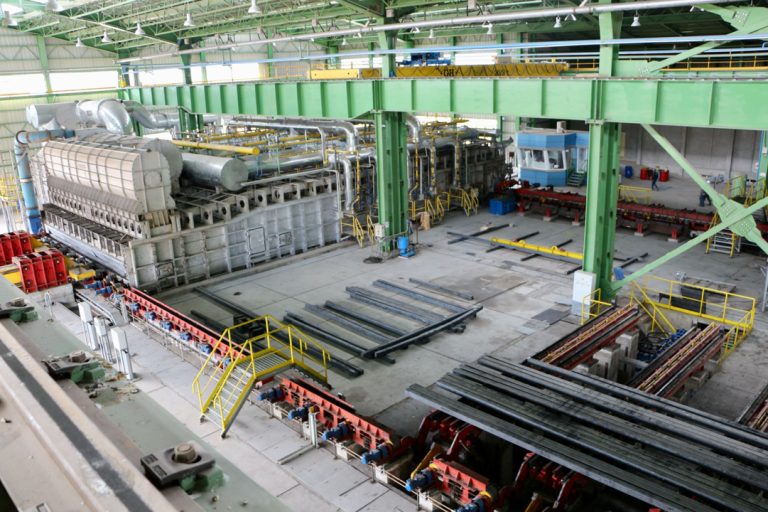
- Overseas Capacity Expansion: Ukraine’s Kametstal Steel Plant has increased the monthly steel billet output of its No. 1 continuous caster to 15,000 tons through the upgrading of casting-stopping technology, doubling the output compared with last year; the output from January to August 2025 reached 58,400 tons, exceeding the total annual output of 2024.
- Short-Term Domestic Production Cuts: In early September, steel plants in northern China implemented temporary production cuts due to the military parade, leading to a short-term decline in molten iron output. However, the production cut period was relatively short, and steel plants resumed production one after another after the parade, resulting in limited impact on the demand for raw materials such as silicomanganese.
Contact Us
Address
High-tech Industrial Development Zone, Zhengzhou City, Henan Province, China.
jean@ji-steel.com
Phone
+86 188 3804 2177
Products
- Continuous Casting
- ● Copper Mould Tube
- ● Mould Assembly
- ● Ladle And Tundish Nozzle
- Steel Melting
- ● Graphite Electrode
- ● CPC/GPC
- ● Continuous Casting Protecting Slag
- ● Furnace Lining Vibrator
- Rolling Mill Equipment
- ● Steel Roll
- ● Tungsten Carbide Roll Ring
- ● Rolling Mill Guides
- ● Roller Table
Contact
- jean@ji-steel.com
- +86 371 6781 0168
- +86 188 3804 2177
- +86 188 3804 2177
- www.ji-steel.com
- High-tech Industrial Development Zone, Zhengzhou City, Henan Province, China.